Did you know that women are 14 percent less likely to receive CPR in the event of cardiac arrest in public settings than men?
There can be many reasons for this; some people are afraid that the situation will be perceived as inappropriate or that someone might accuse them of sexual assault. Others are worried about causing harm if they perform CPR on a woman.
To perform effective CPR, we must quickly remove clothing, including bras. Both chest compressions and the placement of electrodes from a defibrillator require unobstructed access to the chest. In the event of cardiac arrest, we cannot—and do not have time to—worry about whether the person’s breasts are exposed.
We must also dare to apply sufficient pressure, regardless of who is affected. Rib fractures caused by compression are not uncommon, but that is secondary when the goal is to save lives.
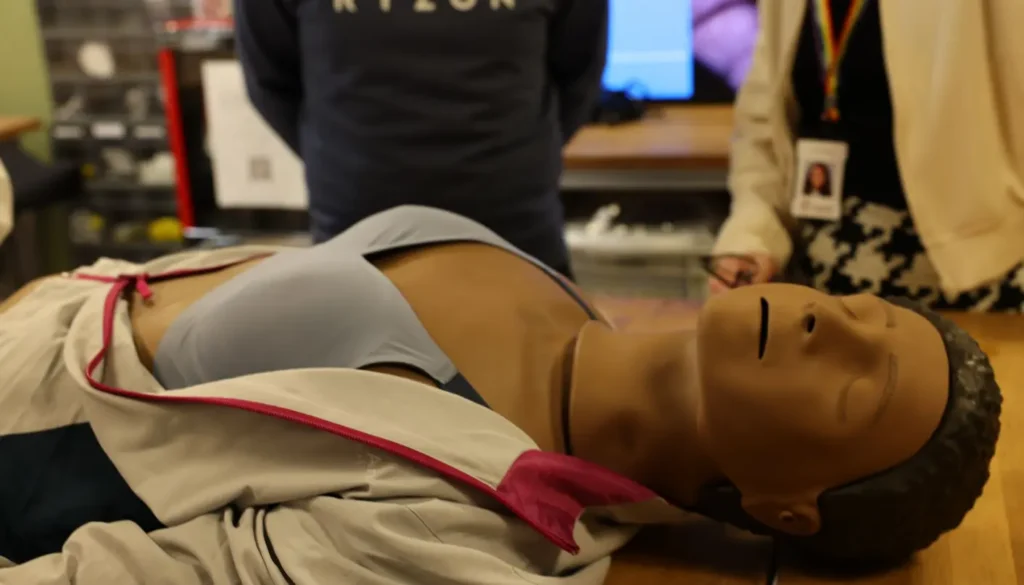
One important factor is that 95 percent of the world’s CPR manikins are modeled after male anatomy or lack breasts. This means that many people never get to practice for situations that actually occur in real life.
We therefore need to practice cutting open a bra, quickly exposing the chest, and performing chest compressions with one breast under our hand. If this feels unfamiliar, it can cause uncertainty. And uncertainty can lead to delays—or, in the worst case, to no one intervening at all.
CPR training must reflect reality. To ensure that more women receive prompt assistance in the event of cardiac arrest, we need to start practicing on all body types, not just male ones.