
Watch Camilla as she discusses the new guidelines for pediatric CPR on *Nyhetsmorgon*.
Every five years, our CPR materials and training programs in Sweden are updated. This is based on ongoing research taking place around the world, with the goal of enabling us to save more people who suffer from sudden cardiac arrest.
In the U.S., there is the American Heart Association; in Europe, we have the European Resuscitation Council (ERC); and in Sweden, we have the Swedish CPR Council, which is responsible for establishing our Swedish guidelines and recommendations for CPR training.
On November 23–24, it was time for the major CPR conference, an event that takes place every five years in Sweden. CPR instructors and coordinators from all over Sweden who work with CPR both in and outside of hospitals gather for the event.
This year, more than 2,500 people attended to hear from leading researchers and experts in the field of cardiovascular research and to learn about the latest changes to CPR guidelines.
Are you interested in working with CPR? Learn more about how you can become a CPR instructor ›
Here are the most significant changes that have taken place regarding pediatric CPR in Sweden:
* For those of you who work in schools, it’s worth noting that this now applies to children through high school.
The reason for changing to a 15:2 ratio is that children are particularly vulnerable to oxygen deprivation. This means they need to receive oxygen more frequently during CPR. Of course, you also perform the five rescue breaths at the beginning before starting CPR; this now applies to all children up to age 18. At the same time, if you’ve never taken a course, or if you’ve taken a course in the past and learned the 30:2 ratio and feel most comfortable with that, you can use the 30:2 ratio. If the child looks like an adult, use the 30:2 ratio.
As always: it’s always better to do something than nothing! We still recommend practicing at least once a year—preferably more often.
Learn more about our pediatric CPR courses ›
Ideally, you should refresh your CPR and first aid skills at least once a year. However, we know it can be difficult to schedule courses and find the right time, as well as to gather the entire staff that often. That’s why our web-based CPR course has become a hugely popular way to refresh your skills frequently.
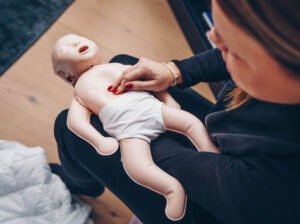
Learn more about the online course in pediatric CPR here
There aren't many changes to adult CPR other than the following:
Learn more about our CPR training courses ›
It was a very exciting conference with a lot of news.
Sudden cardiac arrest outside of a hospital affects 6,000 people per year—16 people per day. This happens in our homes, at our workplaces, and in public places. Only 10% of these people survive. The main focus of the conference is that, in general, it takes too long before CPR is started and defibrillation is performed. If this were done more quickly, more people would survive.
It is clear that it is difficult for both the general public and emergency dispatch centers to recognize cardiac arrest. In many cases, the person exhibits agonal breathing—that is, abnormal breathing. This can lead people to believe that the person is breathing, and as a result, they do not begin CPR. Seizures can also be the first sign of cardiac arrest. This can also be confusing and lead people to place the person in the recovery position rather than starting CPR.
Defibrillators are becoming increasingly common in the community, but few of them are likely registered in the Swedish Defibrillator Registry. Registered defibrillators are made available to our emergency dispatch centers and text-message first responders. We often still lack defibrillators in places where many cardiac arrests occur—such as in the home. This is where 70% of out-of-hospital cardiac arrests occur, yet only 3% of the registered defibrillators in the community are located in homes.
We offer defibrillators for businesses and homeowners' associations. Buy defibrillators or rent a defibrillator from us.
Is it possible to dispatch a drone and have it simply deliver a defibrillator to your yard in the event of a cardiac arrest?
Can smartwatches help prevent cardiac arrest using their ECG and health features? And perhaps help us identify a cardiac arrest with their fall detection, take an ECG, measure oxygen saturation, and, if necessary, alert an ambulance and send a text message to first responders in the event of a cardiac arrest? What a cool idea.
Could we, in the future, build a defibrillator function into a regular cell phone and always be prepared?Yes, as you can see, there are many ideas about how we can save more lives. But to start with: We need more people to regularly practice CPR!Educational research clearly shows that effective CPR skills require frequent, short refresher sessions, rather than a long classroom course every two or three years. And CPR skills—ensuring that someone actually starts compressing the chest—combined with the availability of a defibrillator—that’s what saves lives.